Blog, Virtual Try-On
Find My Size: AI Fit Finder for Accurate Size Recommendations
- By Sampreet
- No Comments
29 Jun
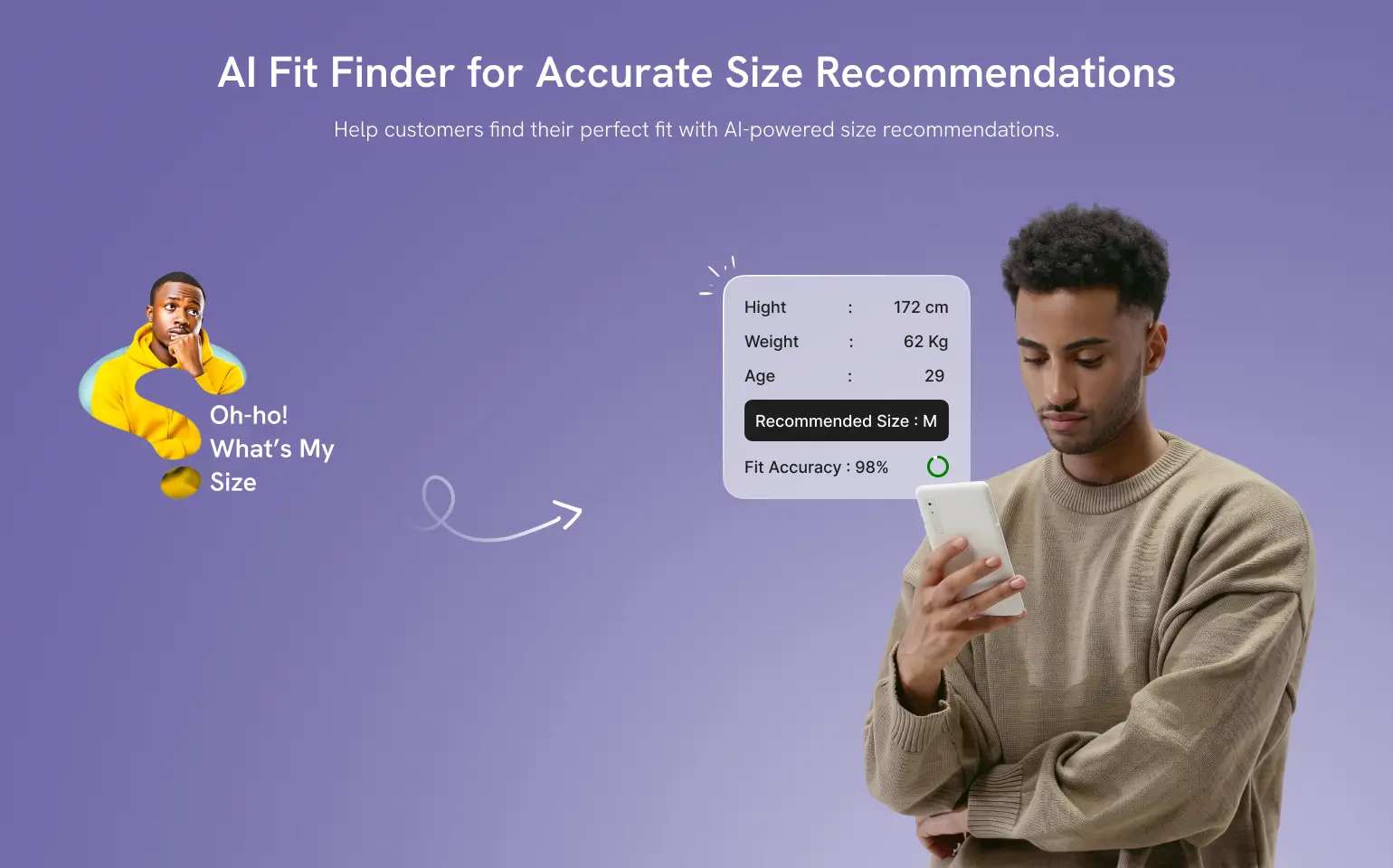
Typical rates of clothing returns on the Internet are 20-40 percent, while for offline transactions it is only 5-8.9 percent. Between 53 percent and 70 percent of all such returns are related to fit problems, while processing one single return will cost merchants between $15 and $30 and can even take 66 percent of the total value of the product. Almost 63 percent of internet customers purposely purchase several items in different sizes, which is called bracketing, while mobile cart abandonment rate is 85.65 percent.
For apparel brands, this isn’t simply a returns problem. It’s a confidence problem. Every shopper who hesitates over sizing is another potential abandoned cart or unnecessary return. That’s why many brands have started looking beyond traditional size charts toward a fit finder that removes guesswork instead of asking customers to do more work.
Comparing Camweara Find My Size with Other Fit Tools
A good size recommendation should do more than suggest “Medium”. It should be fast, brand-specific, easy to use on mobile, and accurate enough that shoppers feel comfortable buying a single size. We reviewed leading sizing solutions, including WAIR, True Fit, and EasySize. While many tools rely on longer quizzes, account creation, or detailed body measurements, Find My Size reduces shopper effort while maximizing confidence.
| Feature | Camweara Find My Size | Other Fit Finder Tools |
|---|---|---|
| SHOPPER EXPERIENCE | ||
| Inputs to get a size | 3 Inputs — Instant Result | 5–8 Quiz Steps |
| Sub-Second Response | Time to recommendation | Multiple Screens Required |
| Page loading time | Very lightweight AI model, so negligible | Not publicly avaiable |
| ACCURACY & BUSINESS IMPACT | ||
| AI size prediction accuracy | Varies by Tool and Clothes | 97-99% Accurate |
| Return rate reduction | 28% Avg. Reduction | 4–20% Range |
| Usage | Unlimited SKUs, unlimited measurements at $39/month | Limited SKUs and capped measurements on lower plans |
| Apparel conversion rate | Higher Checkout Confidence | Higher Cart Abandonment Risk |
| Body measurement insights | Detailed Body Breakdown | Size Label Only |
| DATA PRIVACY | ||
| Shopper data & privacy | Zero Data Stored - Fully Secure, vanishes as soon as user closes the tab | Data Retained - Privacy Risk |
| Data processing | Processed on users devices so it is secure | Processed on Server i.e. users data will be sent to server. |
| INTEGRATION & SETUP | ||
| Shopify integration | 1-Click Shopify App | App or Managed Setup |
| Custom storefront support | API-First - Any Platform | Limited or Dev-Heavy |
| Per-product data upload | Not Required | Required for Accuracy |
| ACCESSIBILITY | ||
| Brand size suitability | All Brand Sizes Welcome | Enterprise or Mid-Market Focus |
| Global brand support | 20+ Countries Supported | Mostly US / EU Focused |
| PRODUCT COVERAGE | ||
| Apparel types supported | Tops, Dresses, Kidswear | Varies by Tool |
The biggest difference isn’t another feature—it’s the reduction in friction. Three familiar inputs (height, weight, and fit preference) replace tape measures and long questionnaires. International shoppers also avoid confusing US, UK, and EU size conversions because they’re handled automatically within the recommendation. And because the recommendation appears inside the mobile shopping flow, customers never have to leave checkout to search a size chart.
Why Traditional Size Charts Continue to Fail at Fit Finding
Traditional size charts were built for stores where shoppers could physically compare garments or ask for assistance. Online, those same charts assume customers own a measuring tape and know exactly how to measure themselves. It’s therefore unsurprising that 84% of shoppers seeking sizing information say conventional grids are confusing, especially on mobile devices.
The problem runs deeper than usability. Standardized sizing has gradually disappeared. Following changes in industry measurement practices, a US women’s size 8 expanded by as much as six inches between 1958 and 2008. Likewise, a garment labeled “Medium” at one retailer may fit like a “Large” somewhere else. Rule-based quiz tools attempt to bridge this gap by asking shoppers what size they wear in another brand, but those answers are subjective and don’t reflect the measurements of the garment being purchased.
A useful AI size recommendation explains confidence rather than replacing one guess with another. Camweara’s Find My Size works from each brand’s actual garment measurements instead of relying on a generic global sizing database. Height, weight, and preferred fit become inputs for a recommendation calibrated specifically to that retailer’s grading system. That means a Medium recommendation reflects that brand’s measurements—not an industry average that may not exist anymore.
How Camweara Find My Size Helps Other Business
Returns increase revenue artificially before subtracting it using reverse logistics, processing expenses, markups, and depreciation. Brackets will merely expedite the process further. By ensuring that people have confidence in the product recommendation to the point where they would order it in one size, marketers can save on shipping and protect their margins from the outset of the transaction.
However, the effect is not limited to just one purchase. Seventy-one percent of all consumers become less willing to shop with the retailer in question after experiencing poor returns handling, while 80% seek personalized shopping experiences. Sizing accuracy is not only about minimizing the probability of returns; it increases consumer confidence and helps keep the acquired clients loyal to the brand.
Shopping for clothes should not be a guessing game anymore.


Recent Posts
Recent Comments

Camweara is on a mission to reduce guesswork in online shopping and save billions of retailers & shoppers time and money.
Enable faster checkout on your Shopify store.

Quick Action
Company
