








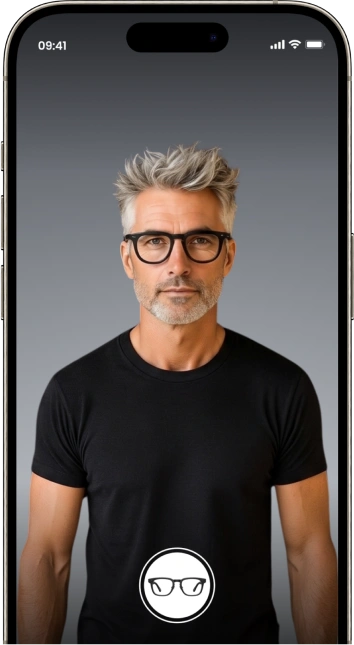












Most eyewear brands already know the problem: visitors browse frames, hesitate at the last second, and leave without buying. The gap is not a lack of interest. It is the lack of confidence that comes from not being able to try the frame on first.

That is why virtual glasses try-on has moved from a nice demo feature to a practical sales tool. When shoppers can see the frame on their face, check the proportions, and judge the style in real time, the product page starts doing the job a store associate would normally do.

Why Eyewear Brands Are Investing in Virtual Glasses Try On

The Confidence Gap Is Expensive

Research shows that 78% of consumers hesitate to buy eyewear online because they are unsure about fit and appearance. For a brand spending heavily to bring traffic in, that is not a small objection. It is the reason paid visitors bounce before checkout.

Another worry that they have is frames will not suit their face shape or personal style. That kind of doubt does more damage than a weak headline ever will, because it hits right before the purchase decision.

Low Conversion Is Usually a Trust Problem

Eyewear ecommerce conversion rates typically sit between 0.5% and 1.5%, which is painfully low compared with broader retail benchmarks. That number usually points to one thing: the shopper wants more certainty than the page is giving them.

When the only view is a product photo on a white background, the customer has to imagine the rest. Most people do not enjoy doing your merchandising for you, so they leave and buy from the brand that makes the choice feel easier.

Returns Eat Margin Fast

Eyewear return rates commonly land between 20% and 30%, and each return can cost $20 to $30 in reverse logistics. That turns a single poor fit decision into a margin leak that keeps reopening itself.

A frame that looked right in a thumbnail but feels wrong on arrival does not just create a return. It creates a second order of work for support, warehouse, and finance teams that already have enough to do.

Retailers Are Asking for More Interactive Buying

Around 35% of eyewear retailers already offer virtual try-on, and 56% plan to invest in AR soon. That tells you where the market is heading: not toward more product photos, but toward fewer guesses.

The brands moving early are not doing it because AR sounds modern. They are doing it because the buying journey needs one more layer of proof before customers commit.

What Makes Virtual Glasses Try On Solution Worth Using

A good virtual try-on solution should reduce uncertainty, not add another tool for the team to explain. The best systems answer the questions shoppers actually ask: Will this fit? Will it look right? Will it stay aligned when I move?

Most AR overlays look fine in a vendor demo. The real test is whether they still hold up on a low-end Android at 9 p.m. on a weak Wi-Fi connection.

Automatic PD Measurement

For prescription eyewear, pupillary distance cannot be an afterthought. Automatic PD measurement removes manual input from the process, which matters because a small miss here can create a real problem once the lens is made.

Real-Time Facial Landmark Tracking

Real-time facial landmark tracking keeps the frame positioned against the eyes, nose bridge, and ears as the shopper moves. That technical detail is what stops the glasses from drifting, floating, or looking slightly wrong when the camera angle changes.

True-to-Scale Frame Visualization

The frame has to look like the real frame, not a loose approximation of it. True-to-scale visualization helps shoppers judge size and proportion before they reach checkout, which is where a lot of bad decisions can still be stopped.

No Mandatory 3D Models

Large eyewear catalogs rarely have the time or budget to build 3D assets for every SKU. A solution that does not require mandatory 3D models removes a genuine operational barrier and lets retailers move faster with the catalog they already have.

That matters because deployment speed is not just a technical detail. It is a trust signal for teams that have already been burned by integrations that took months and delivered less than promised.

Why Camweara Stands Out for Eyewear Brands in 2026

Camweara is built for ecommerce eyewear teams that need the try-on to work inside a real store environment, not just in a polished sales demo. The platform combines AR visualization with automated PD measurement, real-time facial landmark tracking, and a workflow that avoids unnecessary setup friction.

That combination matters because most brands do not need another flashy overlay. They need a tool that helps shoppers feel certain enough to buy, and helps internal teams launch without turning the project into a six-month side quest.

Comparison Snapshot

Capability

Camweara

Other Tools

Best For

PD Detection

Automatic PD measurement

Limited or unavailable

Prescription eyewear retailers

Facial Tracking

Real-time facial landmark tracking

Basic 2D to 3D face tracking

Accurate frame placement

Integration Speed

Fast deployment

Often complex setup

Faster time-to-market

3D Asset Requirement

No mandatory 3D models

Often requires 3D assets

Large product catalogs

AI Face Mapping

Personalized frame alignment

Standard AR overlays

Improved customer confidence

Ease of Use

Simple workflow

Moderate learning curve

Lean ecommerce teams

The ROI of Virtual Glasses Try On

Virtual try-on earns its place when it changes numbers that matter: conversion, returns, and customer confidence. A 27% to 400% lift in conversion sounds attractive on paper, but the real value is simpler — more visitors reach the point of purchase without second-guessing the frame.

A 20% to 35% reduction in returns does more than save shipping costs. It protects margin, reduces support load, and keeps inventory from cycling through the same avoidable mistakes.

When shoppers can see the frame on their face before they buy, the product page starts doing work that usually falls on a store visit. That shifts the conversation from “Should I risk it?” to “This looks right.”

Shopping for glasses should not be a guessing game anymore.

Related Post